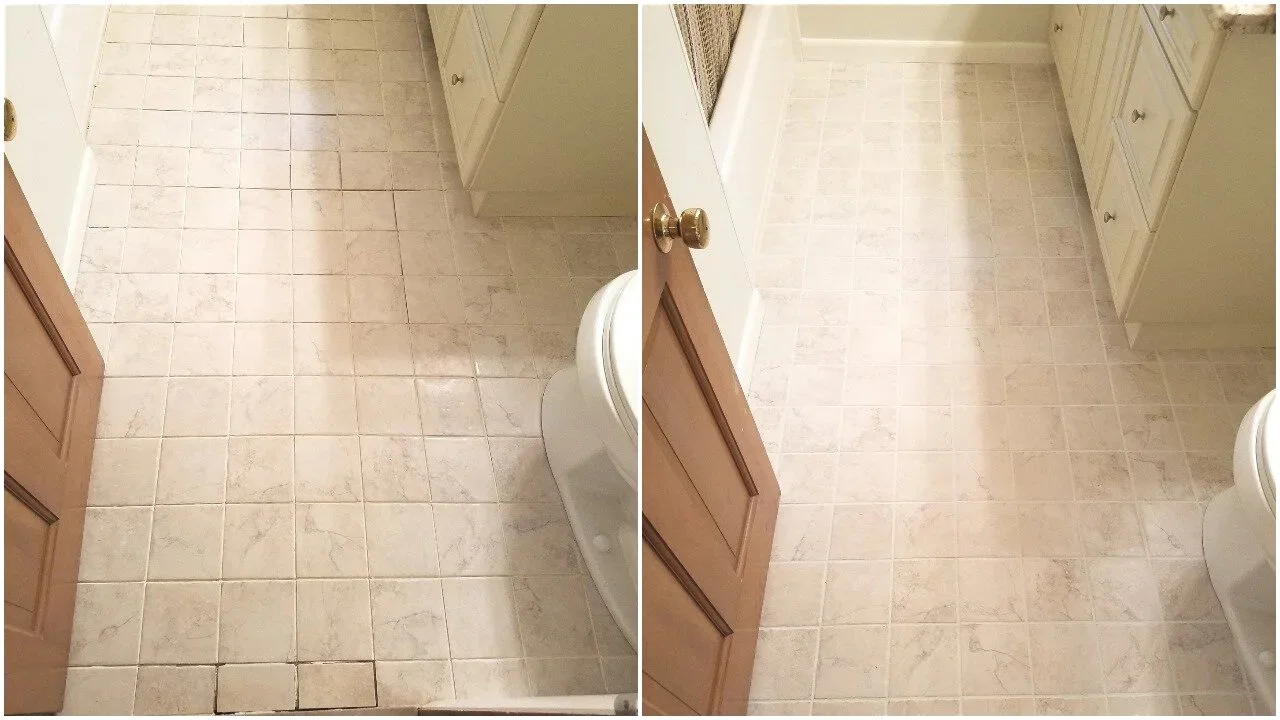
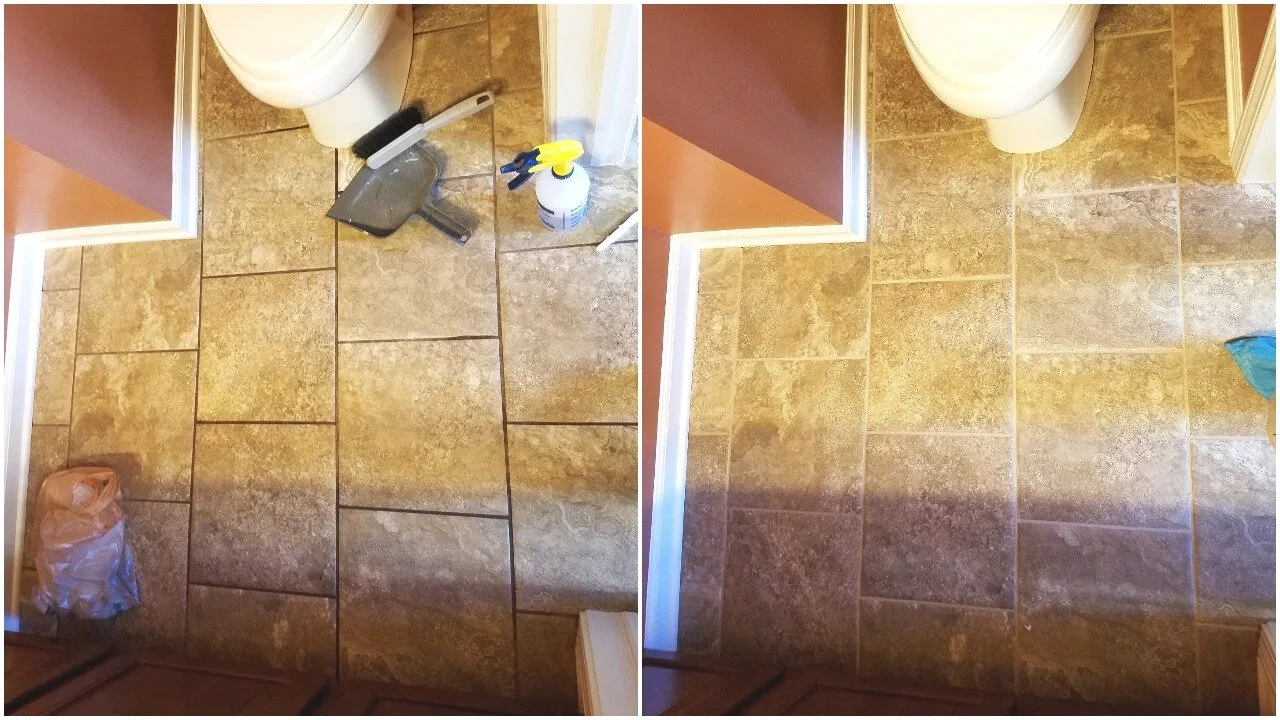
Why the Grout Pen Isn’t the Quick Fix You Think It Is.
Walk through any home improvement store and you’ll find a wall of grout pens promising fast, budget-friendly solutions to dingy, discolored grout. And at first glance, they seem to deliver - a few swipes and your grout lines look crisp and bright. But here’s the problem our technicians see all the time: that result rarely lasts. Restoration Tile & Grout has been called to fix failed grout pen applications on kitchen backsplashes, bathroom floors, and shower walls. What was supposed to be a weekend DIY project becomes a costly do-over.
This guide breaks down exactly what grout pens are, where they fall short, and how professional-grade restoration, using commerical grade epoxy sealers and industry tools, delivers results that actually hold up over time.
What Exactly is a Grout Pen?
A grout pen is essentially a paint marker filled with water-based pigment or colorant. You drag it along grout lines to cover stains, discoloration, and general aging. The product sits on top of the grout surface rather than penetrating or restoring material beneath.
Most grout pens retail for $8 and $25 and are marketed for use on ceramic, porcelain, and natural stone tile grout. Some come in a single shade of white; others offer a range of grays and beiges. They require no special tools, no mixing, and no professional knowledge, which is precisely why they’re appealing, and precisely why they’re so often misused.
WHAT OUR TECHNICIANS SEE
When Restoration Tile & Grout gets a call for grout restoration, a growing number of jobs begin with removing or working around previous grout pen application. The paint has peeled, smeared, discolored, or created an uneven, splotchy surface that’s harder to address than the original issue would have been.
Grout Pens Pros & Cons: An Honest Look
There are legitimate use cases for grout pens - we’ll cover those shortly. But it’s important to go in with clear eyes about what the product can and can’t do.
Why Grout Pens Fail: The Details Matter
Splotchy, Inconsistent Coverage: Grout lines are porous, and that porosity is rarely uniform, especially in older homes or tiles that have been cleaned with harsh chemicals. A grout pen deposits pigment unevenly, pooling in deeper pores while skimming over raised or denser areas. The result is a streaky, blotchy appearance that can look worse than the original discoloration under certain lighting conditions.
It Wears Away - Fast: Because a grout pen applies a surface coating rather than restoring the grout itself or sealing it, foot traffic and routine cleaning erodes the pigment quickly. In high-traffic areas like kitchen floors, hallway entries, and commercial spaces, the coverage can begin fading within weeks. What looked refreshed on application day starts forming into irregular shapes.
Moisture Is Its Enemy: Showers, tub surrounds, and bathroom floors are the worst environments for a grout pen. Sustained exposure to water, steam, and cleaning products accelerates the breakdown of the water-based pigment. Our technicians frequently see grout pen applications in showers that have peeled, mildewed beneath the coating, or developed a chalky residue that traps soap scum. In some cases, the failed coating actually seals in moisture and promotes mold growth in the underlying grout.
Staining and Discoloration of Tile Surfaces: Applying a grout pen in tight spaces, especially on small-format tiles or mosaic work, almost always results in excess pigment on the tile surface itself. On porous or natural stone like travertine, marble, or slate. this pigment can absorb into the tile face and become nearly impossible to remove without professional intervention. Even on glazed ceramic and porcelain, dried pigment leaves a hazy residue along tile edges and is difficult to scrub off without scratching the glaze.
It Doesn’t Fix the Underlying Problem: Grout pen discoloration, staining, and crumbling are usually symptoms of a deeper issue - whether that’s aged grout, missing sealant, subsurface moisture, or poor original installation. Painting over grout lines with a marker addresses none of that. It’s a cosmetic cover-up on a structural problem, and it tends to make the eventual professional repair more complicated and expensive.
REAL JOB SCENARIO
A homeowner applied a white grout pen throughout a master shower to brighten the room before listing their home for sale. Within weeks of the new owners moving in, the pigment had peeled along the floor grout lines, revealing stains beneath. Restoration Tile & Grout was called in to strip the pen residue, treat the discoloration, and apply a professional-grade epoxy colorant - a job that took more time, cost more than a direct restoration would have.
Grout Pen vs Professional Restoration: A Direct Comparison
To understand why professional restoration is a fundamentally different category of service, it helps to see the two approaches side by side.
Why Epoxy Changes Everything
One of the most significant differentiators between what Restoration Tile & Grout uses and what a grout pen delivers is the product category itself. Out technicians apply professional-grade epoxy colorants and sealers - a fundamentally different technology than a paint marker.
Epoxy Colorants: What They Are
Epoxy grout colorants are two-part systems, a resin and a hardener, that chemically bond to the grout surface when mixed and applied. Unlike a water-based pigment pen that sits on top of the grout and dries like paint, epoxy formulations penetrate into the grout pores and cure into a hard, durable, waterproof finish. The result is a color restoration that is structurally part of the grout rather than a coating laid over it.
Epoxy finishes resist moisture, cleaning chemicals, mold, and mildew - making them ideal for showers, wet areas, and kitchen surfaces where grout pens consistently fail.
The cured epoxy surface is non-porous, which means future staining is dramatically reduced - one of the key long-term advantages over both untreated grout and grout pen application.
Professional application ensures even, controlled coverage. There is no bleeding onto tile faces, no pooling in low spots, and no splotchy sections where the pigment didn’t adhere.
Epoxy colorants are available in a wide range of colors and can be matched to original grout specifications, allowing for seamless restoration that blends across the entire floor or wall surface.
FROM THE TECHNICIANS AT RESTORATION TILE & GROUT
”When we walk into a job where a grout pen has been used, we can tell instantly. The inconsistency is a dead give away.”
When a Grout Pen Is Acceptable
We’re not here to say grout pens have zero use. In a narrow set of circumstances, they’re a reasonable option:
Very Small Touch-Ups in Low Traffic Areas: A single discolored grout line in a decorative backsplash that sees no foot traffic and minimal moisture? A grout pen may hold up.
Testing a Color (My personal fav): Unsure which grout color to commit to? A pen can help visualize the look before you call in the professionals.
Everything Else, Call a Professional: Showers, kitchen floors, entryways, high traffic bathrooms, natural stone, commercial tile, any area with real use demands a solution that lasts.
When You Should Call a Professional
Certain conditions make professional restoration not just preferable but necessary. If any of the following apply to your tile and grout situations, a grout pen will not solve the problem - and may make it worse.
→ Shower enclosures and wet areas: Moisture exposure guarantees a grout pen will fail. Epoxy-based professional restoration is the only durable solution.
→ High-traffic floors: Any floor that sees regular foot traffic - entry ways, kitchens, hallways - will erode grout pen coverage quickly. Professional sealers are built for this environment.
→ Cracked, crumbling, or missing grout: A grout pen can’t fill cracks or voids. This requires professional regrouting and sealing.
→ Natural stone tile (marble, travertine, slate, limestone): Porous stone absorbs grout pen pigment unpredictably. Professional stone-compatible sealers and colorants are required.
→ Mold or mildew present: Painting over mold doesn’t kill it - it traps it. Professional treatment and sealing is the only responsible approach.
→ Large surface areas: Whole bathrooms, full kitchen floors, tiled entryways. Consistency and durability over a large area require professional-grade equipment and materials.
→ You’ve already used a grout pen and it’s failing: Stripping the old pigment and doing a proper restoration is now more involved, but it’s the only way to get lasting results.
The Bottom Line
Grout pens are clever marketing for a product with real limitations. For small, low-stakes touch-ups in dry, low-traffic areas, they serve a purpose. But for the vast majority of tile and grout situations - especially in bathrooms, kitchens, and high-traffic floors - they deliver a temporary cosmetic fix that wears away, stains, and ultimately costs more money to correct than a professional restoration would have cost upfront.
Restoration Tile & Grout’s technicians use commercial-grade epoxy products and professional techniques that address the grout itself - not just its appearance. The difference isn’t just visible on day one. It’s still visible years later.
If you’re weighing the grout pen versus the professional, consider this: our technicians have redone grout pen work numerous times. And once they do, it’s covered with our 1-year guarantee. And that’s something no grout pen has.